
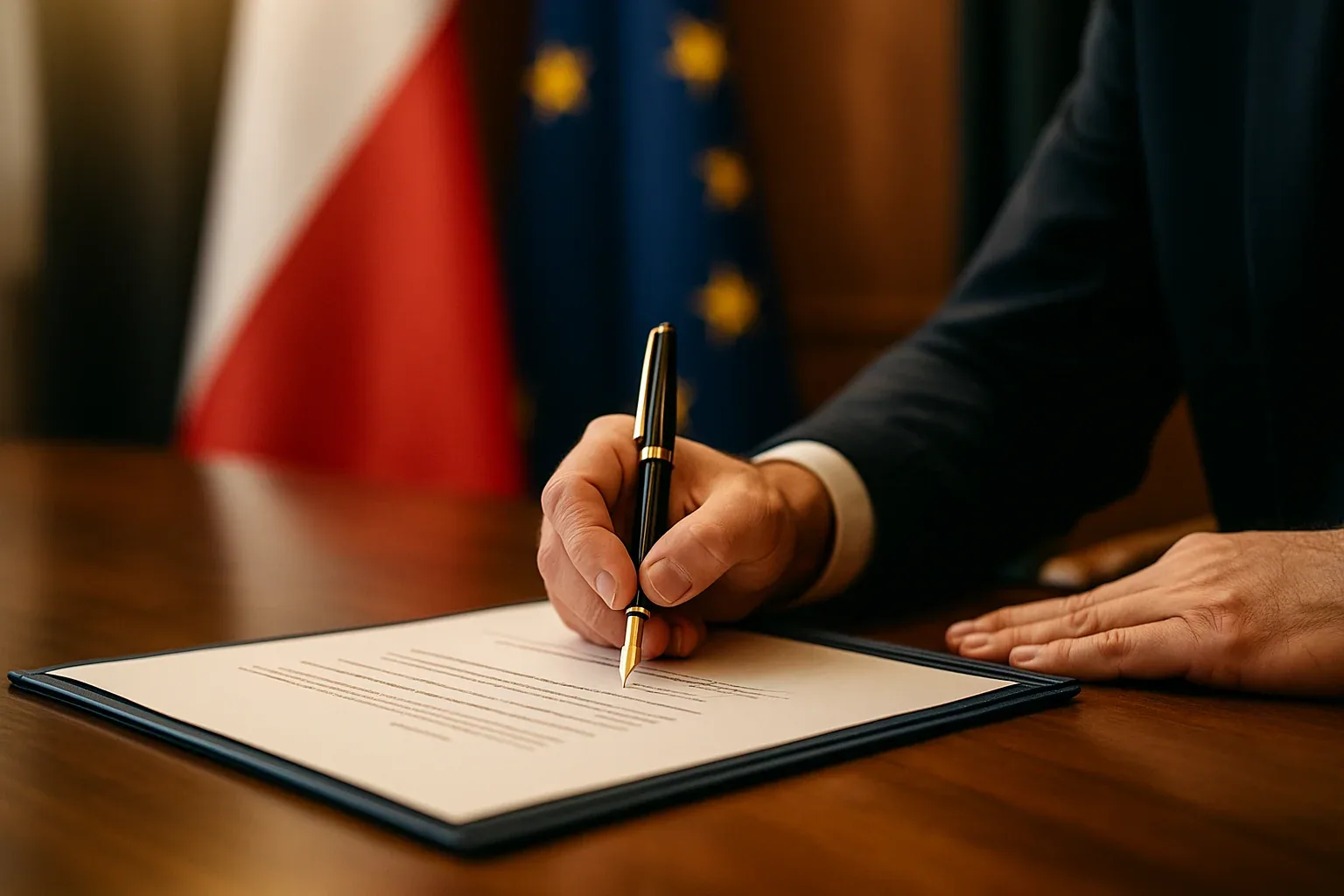
President signed VAT amendment regarding KSeF
Updates to Poland’s VAT legislation create the regulatory basis for scaling the KSeF (Krajowy System e-Faktur) and a phased transition to electronic invoices. Below is a brief overview and practical actions for companies.
What changes
- Mandatory use of electronic invoices in KSeF for defined categories of taxpayers is introduced.
- Rules for issuing, receiving, correcting and storing e-invoices are clarified.
- Technical requirements for identification, electronic signature and event logging in KSeF are described.
- Greater responsibility for data quality and correct company details.
Who is affected
VAT taxpayers issuing/receiving invoices for transactions in Poland, including international groups with Polish entities. Some special regimes and transactions outside KSeF have specific rules.
Key dates
- Entry into force — phased. Exact timing depends on taxpayer category and future guidance.
Impact on processes
- Need to integrate finance/ERP systems with the KSeF API or use a connector.
- Updates to master data (counterparties, VAT rates, item catalogues) and validation rules.
- Clear roles and permissions: who creates, signs, sends and corrects e-invoices.
What to do now
- Inventory the invoicing flow: templates, data sources, manual steps.
- Check your ERP/accounting system for KSeF export/integration capabilities.
- Review electronic signature policies and access rights; update powers of attorney.
- Prepare test scenarios: base e-invoice, corrections, cancellations, returns.
- Train the finance team: responsibilities, sequence of actions, common errors.
Controls and risks
- Pre-submission validation: completeness of fields, correct VAT rates, unique numbering.
- Status monitoring in KSeF and handling of rejections.
- Archiving and event logs for audit and compliance.
Track official guidance and update processes as requirements evolve.